Helping means doing what you're asked. Ownership means being the person who notices it needs asking. A partner, whether a husband, wife, boyfriend or girlfriend, can help a great deal and own nothing, and that's often why both people feel unappreciated: one is doing plenty of tasks, and the other is still in charge of all of them.
Where the idea comes from
"Ownership vs helping" is Tiptoe's plain-language framing rather than an academic term, but it rests on sources you can check.
- The research. Allison Daminger's 2019 paper splits household thinking into anticipating needs, identifying options, deciding and monitoring. Someone can do the physical task while another person does all four of those.
- The comic. Emma's You Should've Asked took on the line in its title. Waiting to be asked makes the other person the manager.
- The method. In Eve Rodsky's Fair Play, one person will "conceptualize, plan and execute" a task. See Fair Play cards.
Tiptoe uses four jobs inside every chore: notice, plan, do and follow up. Helping usually covers "do". Ownership covers all four.
The same job, both ways
- Groceries. Helping: picks up the order you placed. Ownership: knows what's low, plans the week, orders, picks up and puts away.
- Kid's birthday party. Helping: "Tell me what to bring." Ownership: chooses a date, sends invitations, tracks replies and orders the cake.
- Dog. Helping: walks her when asked. Ownership: walks her, knows when she's due at the vet, books it, reorders food.
- Laundry. Helping: folds what's in the basket. Ownership: notices the hamper, keeps detergent stocked, knows what can't go in the dryer.
- Car. Helping: takes it in when told. Ownership: notices the inspection is due, finds a shop, books it and keeps the receipt.
- Bills. Helping: pays the one you forward. Ownership: knows what's due, checks that the amount is right, and handles the phone call when it isn't.
The giveaway phrases are "Just tell me what to do" and "You should've asked". Both are usually meant kindly, and both keep the manager in place.
What ownership is not
- It is not doing everything alone. Owners can ask for help or delegate. The difference is that they're the ones who decide to ask.
- It is not doing it your partner's way. Ownership includes the method, within whatever you've both agreed. If someone is hovering, see gatekeeping.
- It is not forever. Jobs can move when work or life changes.
- It is not an insult to helping. Helping is real and often needed, especially in a crisis, or when one person is sick. It just doesn't reduce the load on the person running the job.
- It is not 50/50 by count. One person can own five small jobs, and the other can own one big one.
How to switch from helping to owning
Step 1. Choose one job with a clear edge, like the dog, the car or the trash. Don't begin with something huge like "the kids".
Step 2. List all four jobs for it, and write down what the current owner knows.
Step 3. Hand over, and use a sentence like this:
"I want to stop being in charge of the car. That means you'd notice when it's due, book it and deal with the shop, and I won't remind you. If it's late, it's late. Does that work, and what would you need to know from me?"
If you're the one who's been helping, you can start it:
"I've been asking what you need, and I realize that leaves you running it. I'd like to take the dog, all of it. Can you tell me everything in your head about her on Saturday?"
Step 4. Agree what done means.
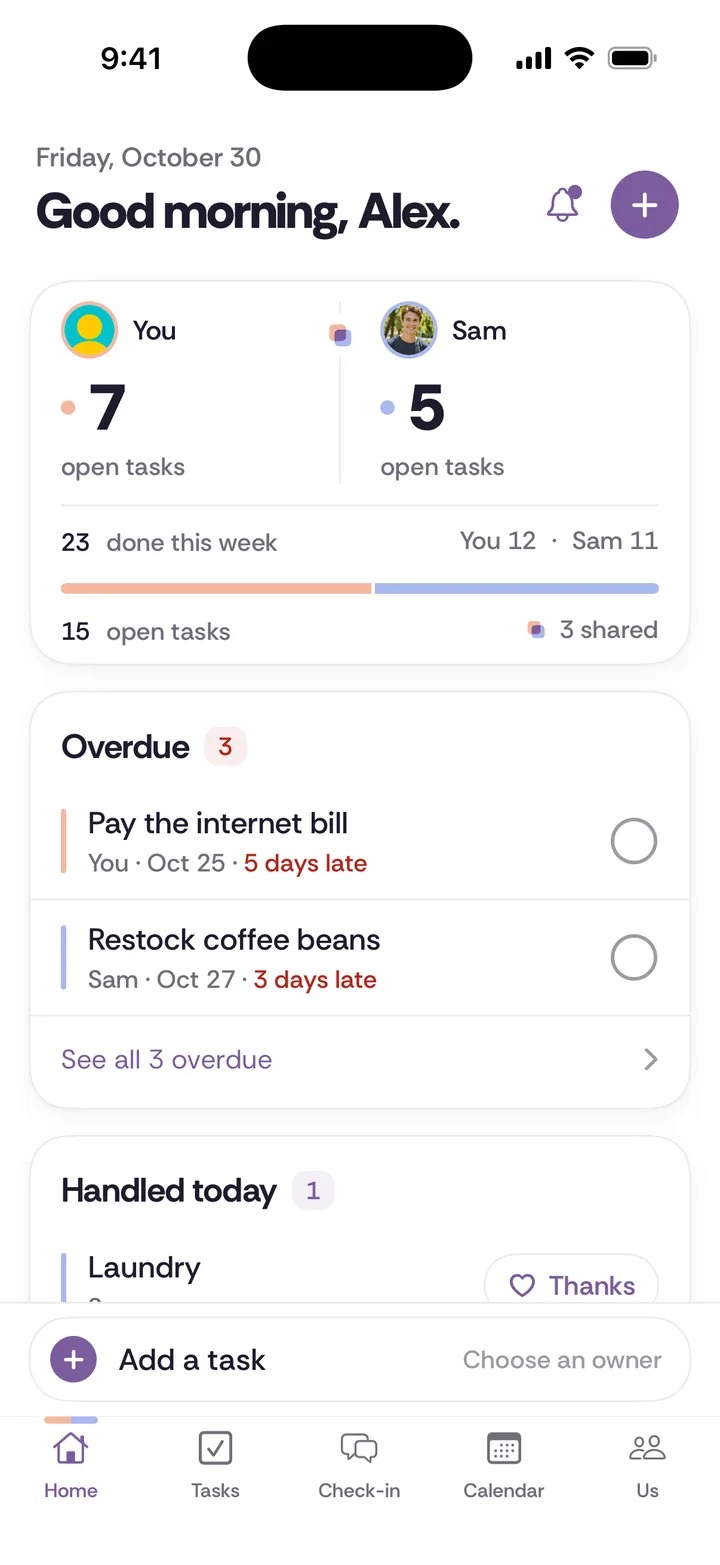
Step 5. Credit the person it was assigned to, and stay out of it. A full walk-through of splitting chores or a sheet of paper on the fridge can hold this. So can a chore in Tiptoe with one owner and a schedule, where a completed item counts for the person it was assigned to.
Ownership vs a handoff
Ownership describes the state, and a handoff is how it moves. A handoff that transfers only the doing creates a helper. One that transfers the noticing, the information and the right to decide the method creates an owner. If you still get asked where the vet's number is three weeks later, the handoff isn't done. Ask for what's missing, and put it where the new owner can find it without you.
Questions about ownership vs helping
My husband or wife says "just tell me what to do." What should I say?
Try: "I appreciate the offer. What I need is for one job to be yours, so I don't have to think about it at all. Which of these would you like to own?" That keeps the goodwill and changes the arrangement.
Isn't helping better than nothing?
Yes. Helping is real work, and it matters. But it leaves the planning with the same person, so their load may not change much. If you already help a lot and it isn't landing, that's probably the reason.
How do I know who really owns a chore?
Ask who would notice first if it stopped happening, and who gets the call if something goes wrong. That person is the owner, whatever the chore chart says.